Best Practices
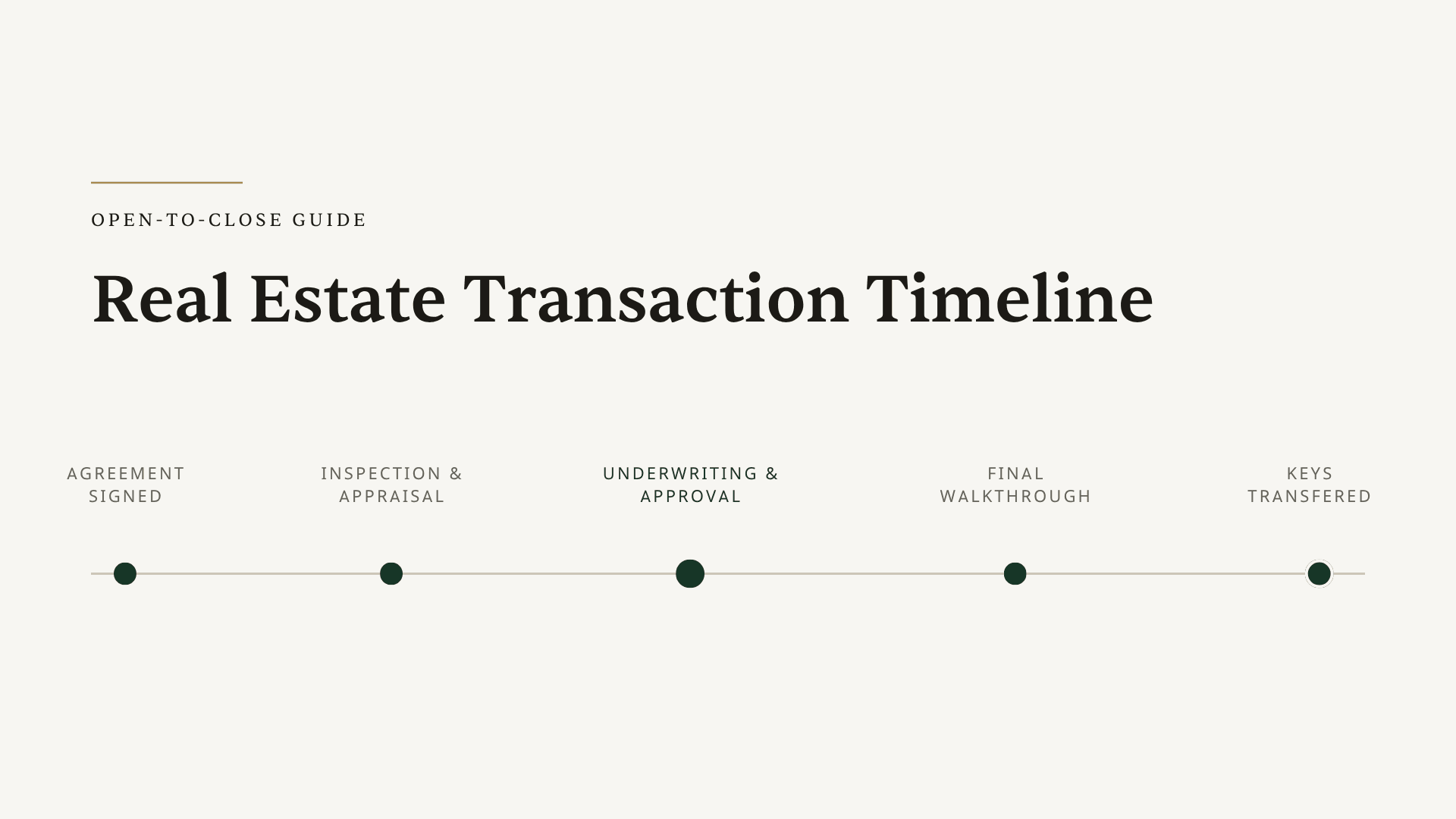
Real Estate Transaction Timeline: Open-to-Close Guide
How do TCs managing 30+ files a month keep everything straight without missing deadlines or letting critical tasks slip through the cracks?
It's not superhuman memory. It's not working 80-hour weeks. It's having a system that tracks every task from the moment a contract is ratified until the keys change hands. The difference between a TC stuck at 12 files and one scaling to 40 comes down to understanding the open to close process inside and out.
This guide breaks down the complete real estate transaction timeline, phase by phase, so you always know exactly what needs to happen and when.
What Does "Open to Close" Mean in Real Estate?
The open to close process refers to everything that happens between contract acceptance and closing day. For most financed purchases, this window runs 30 to 45 days, though cash deals can close in two weeks and complicated transactions might stretch to 60 days or more.
According to ICE Mortgage Technology, the average time to close was 41 days in late 2025. But your actual timeline depends on what's written in your contract, your state's requirements, and your financing type.
For transaction coordinators, this window contains anywhere from 150 to 200+ individual tasks depending on the transaction type, state requirements, and brokerage compliance standards.
The Five Phases of Open to Close

Every real estate transaction follows the same five phases, though the specific deadlines are determined by your purchase agreement and state law. The contract dictates the timeline, not the other way around.
Phase 1: Contract Execution
The clock starts ticking the moment both parties sign the purchase agreement. In these first critical days, you're racing to get everything documented and distributed.
The earnest money deposit needs to hit the escrow account within the timeframe specified in the contract. Miss this deadline and you've given the seller grounds to void the contract.
Initial disclosures go out to all parties. The title company gets looped in. And you're building out the transaction file that will grow to hundreds of pages by closing.
This is where most manual errors happen. Hand-keying dates from a 15-page purchase agreement with three counteroffers and handwritten amendments takes 20 to 30 minutes. One transposed number on a contingency deadline can derail the entire deal weeks later.
This is exactly why AI contract reading has become essential for high-volume TCs. When you can upload a messy PDF and have every date extracted in under 60 seconds, you eliminate the "did I copy that right?" anxiety that haunts manual entry.
Phase 2: Due Diligence
The due diligence period is where deals go to die or get renegotiated. Inspections, appraisals, title searches: everything that could surface a problem happens in this window. Your contract specifies exactly how long buyers have for inspections and other contingencies.
Home inspections typically happen early in this phase. The inspector's report might flag issues that trigger repair negotiations, credit requests, or in worst cases, buyer termination.
The appraisal gets ordered once the buyer's loan application is in process. If it comes in low, you're looking at renegotiation, a larger down payment, or a canceled contract.
Title search runs concurrently, looking for liens, easements, encumbrances, or ownership issues that could cloud the transfer. HOA document review happens here too if applicable.
For California transactions, this phase includes state-mandated disclosures like the Transfer Disclosure Statement and Natural Hazard Disclosure. Texas deals have their own unique option period that functions differently from standard contingencies.
The coordination challenge here is immense. You're tracking multiple vendors, managing document flow from inspectors and appraisers, and keeping all parties informed while negotiations potentially shift the terms.
Phase 3: Loan Processing
While due diligence wraps up, the lender is grinding through underwriting. This is the black box phase where TCs have limited visibility but maximum anxiety. Cash transactions skip this phase entirely, which is why they can close much faster.
The buyer's loan file moves through document verification, employment confirmation, asset verification, and credit review. Conditions come back: the underwriter needs another bank statement, a letter of explanation for that deposit, verification of the source of gift funds.
Each condition is a potential delay. Each delay pushes the closing date. And each closing date change ripples out to everyone involved: the seller's moving plans, the buyer's rate lock, the title company's schedule.
The key metric here is "clear to close": the lender's confirmation that all conditions are satisfied and they're ready to fund. Until you have CTC, the closing date is provisional.
Phase 4: Pre-Closing
The home stretch. Clear to close is in hand, and now it's about dotting i's and crossing t's.
The Closing Disclosure goes to the buyer at least three business days before closing, as required by CFPB regulations. This three-day rule is inflexible. Any changes to loan terms restart the clock.
Final walkthrough happens shortly before closing, typically 24 to 48 hours out. The buyer confirms the property is in the agreed condition, repairs were completed, and nothing new has gone wrong.
Wire instructions get verified. And here's where you need to emphasize wire fraud prevention with your clients. The FBI reports hundreds of millions lost annually to real estate wire fraud schemes. One spoofed email with fake wiring instructions can cost your client their entire down payment.
Phase 5: Closing
Signing day. The buyer sits down with a stack of documents, signs roughly 100 times, and hands over a cashier's check or confirms the wire.
The title company records the deed with the county. Funds disburse to the seller. Keys change hands. Transaction complete.
Except your job isn't quite done. Post-closing follow-up includes confirming recording, distributing final documents to all parties, and updating your files for compliance and future reference.
Common Delays and How to Prevent Them
After managing enough transactions, you start to see the same delays over and over. Here's what causes most closing pushbacks and how to get ahead of them.
Appraisal issues account for roughly 20% of delayed closings. Low appraisals force renegotiation. Appraisal scheduling backlogs in hot markets can add weeks. The fix: order the appraisal immediately once the contract is ratified, not after inspection clears.
Title problems are harder to anticipate but can be deal-killers. Unknown liens, boundary disputes, estate issues with deceased owners. Order title early and flag anything unusual to the closing attorney immediately.
Financing delays stem from incomplete documentation or changed buyer circumstances. A new car purchase, job change, or unexplained large deposit can restart underwriting. Coach your buyers on financial hygiene during the contract period.
Inspection negotiations that drag on eat into your timeline buffer. Set clear expectations upfront about response deadlines and have repair addendum templates ready to go.
The best defense against all of these? Proactive communication. TCs who check in with all parties twice weekly catch problems while they're still small. TCs who wait for updates to come to them discover issues when it's too late to course-correct.
Managing 180+ Tasks Without Missing Deadlines
Here's the math that keeps TCs up at night. A typical transaction has 150 to 200+ tasks across the open to close timeline. If you're managing 20 active files, that's 3,000 to 4,000 individual action items in flight simultaneously.
No human can track that in their head. Spreadsheets break down at scale. Even basic task management software requires manual entry of every deadline for every transaction.
This is where transaction management technology becomes non-negotiable for TCs who want to scale beyond 15 to 20 files per month.
The game-changer is automatic deadline calculation. "7 business days from contract date" sounds simple until you're doing it for 25 transactions across 8 states with different holiday calendars. One miscalculation and you've missed a contingency deadline.
Ava handles this automatically. Upload the contract, and every deadline gets calculated correctly based on what's actually written in your agreement, including the tricky ones like "5 business days before closing" that require working backward from a date that might itself change.
The difference between manual deadline management and automated tracking is the difference between working IN your business and working ON your business. When you're not spending 30 minutes per file just entering dates, you can spend that time on client communication, problem-solving, and taking on additional volume.
The Bottom Line
The open to close process follows the same five phases for every transaction: contract execution, due diligence, loan processing, pre-closing, and closing. But the specific deadlines within those phases come from your contract terms and state requirements, not a universal template.
TCs who master this process, and build systems to manage it, are the ones who scale from 15 files to 30 to 50+ without burning out. The ones who rely on memory and manual tracking hit a ceiling they can't break through.
Your first step: map your current process against these phases and identify where delays typically originate in your transactions. Then build the systems, whether automated or manual, to catch those issues before they become closing delays.