Industry Insights
Open to Close Setup Took 9 Months. Ava Starts Day One.
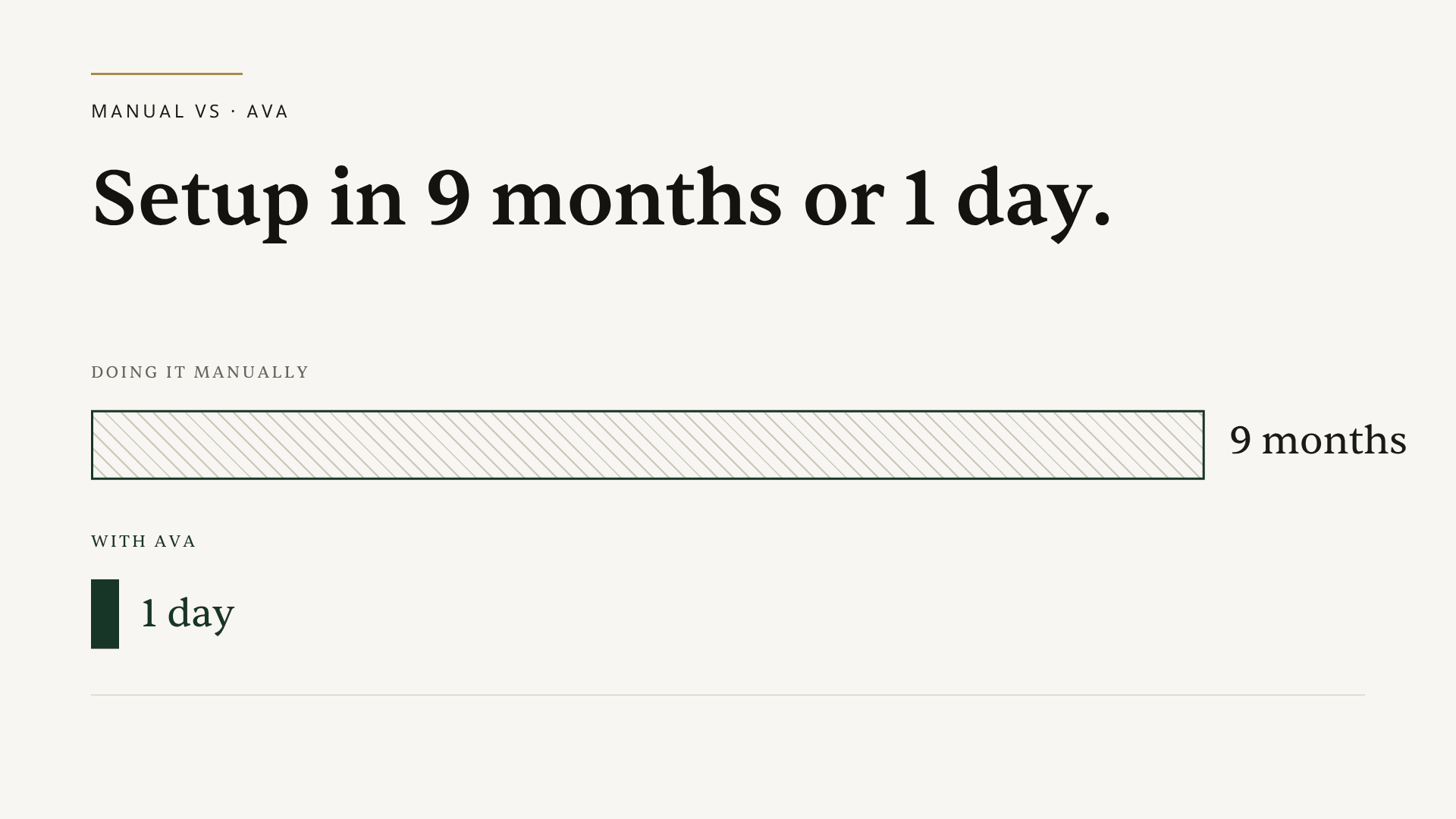
"Open to Close took nine months to build out." That is how a TC business owner who demoed Ava described setting up her previous system. Not nine days. Nine months of triggers, templates, and rules before the platform could run a single deal the way she wanted. If you are weighing Open to Close right now, or quietly wondering whether the system you already built was worth the months it took, this is the tradeoff worth understanding before you spend another quarter configuring software.
This is not a hit piece, and it is not a feature table. Open to Close is a capable platform, and plenty of teams run it well. It is a story about two different models for getting a transaction system working: one you build, and one you connect.
What Open to Close actually is
Open to Close is a workflow automation platform built for transaction coordinators and TC businesses. You can read about it on their own site. At its core, it is deeply customizable. You define your processes, and the platform runs them: task templates for each transaction type, automations that fire when a stage changes, email sequences, and the logic that ties it all together. For a team that wants total control over every step, that flexibility is the appeal.
The catch is in the word "define." Almost everything the platform does is something you have to set up first.
What "building it out" really involves
When a coordinator says setup took nine months, here is what those months go into.
Templates for every transaction type. A buyer file, a seller file, a referral, a new build, a lease. Each one needs its own task list, built by hand.
Triggers and automations. You decide what happens when a deal moves from one stage to the next, and you wire each rule yourself. Miss a trigger, and the automation simply does not fire.
Clause and contingency logic. Inspection periods, financing deadlines, and contingency windows all have to be translated into rules the system can follow, then tested until they calculate correctly.
State-by-state rules. If you serve more than one state, every state's timeline math becomes another layer of configuration. A California file counts its contingencies differently than a Texas option period or a Florida inspection window, and a build-it-yourself system needs each of those encoded by hand.
None of this is wasted effort, exactly. It produces a system tuned to your business. But it is months of work that happens before the tool saves you a single minute, and it has to be maintained every time a form changes or you take on a new market.
The hidden cost of a system you configure
A built system is only ever as good as what you put into it, and that has two consequences that show up later.
The first is the edge case. The handwritten counteroffer, the unusual financing arrangement, the addendum that moves three dates at once. If you did not anticipate it during setup, the system does not handle it, and you are back to doing it by hand.
The second is growth. The moment you expand to a new state or add a new transaction type, you are building again. The setup cost is not a one-time tax. It returns every time your business changes, which, if things are going well, is often.
"It's not a matter of if we're going to use it, it's a matter of how we're going to optimize it." — a TC business owner
What "day one" looks like with Ava
Ava starts from the other end. Instead of asking you to describe your process so the software can follow it, Ava reads the deal and builds the process for you.
Day one is short. You connect your Gmail, you upload a contract, and Ava reads it. It extracts the dates and parties, calculates the contingency periods, and builds the timeline, with no templates to design and no triggers to wire. You can see exactly how the reading works on the contract review page. The first real file you run is a working file, not a configuration exercise, and if you want to try it on your own contract, your first intake is free.
Because the timeline comes from the contract rather than from a template, the edge cases and the new states stop being setup problems. A new market means a new contract uploaded, not a new rule library built. That is what the nine-month story is really pointing at: not that one platform is faster to click through, but that one model removes the build entirely. It is the core of what a contract-reading transaction system changes about the work.
So which model fits you
Be honest about the tradeoff, because there is one. A build-it-yourself platform like Open to Close gives you granular control and a system shaped exactly to your processes, if you have the months and the appetite to build and maintain it. That suits some teams, especially ones with a dedicated operations person who enjoys owning the configuration.
Ava trades that configuration for reading. You give up some of the build-everything control in exchange for a system that works on day one and adapts to each contract on its own. For most coordinators and TC businesses, especially the ones trying to grow without losing a quarter to setup, that trade is the easy one.
The short version is the line we keep coming back to: Open to Close is what you build, and Ava is what you connect.
If you are specifically comparing the two head to head, the Open to Close alternative page lays it out directly. If you would rather just see what day one feels like, book a demo and bring your hardest contract, or get started and run your first deal free at app.listedkit.com. Ava is usage-based at $14.99 per intake with no monthly subscription, so there is no setup project, and no software bill waiting at the end of the build.